
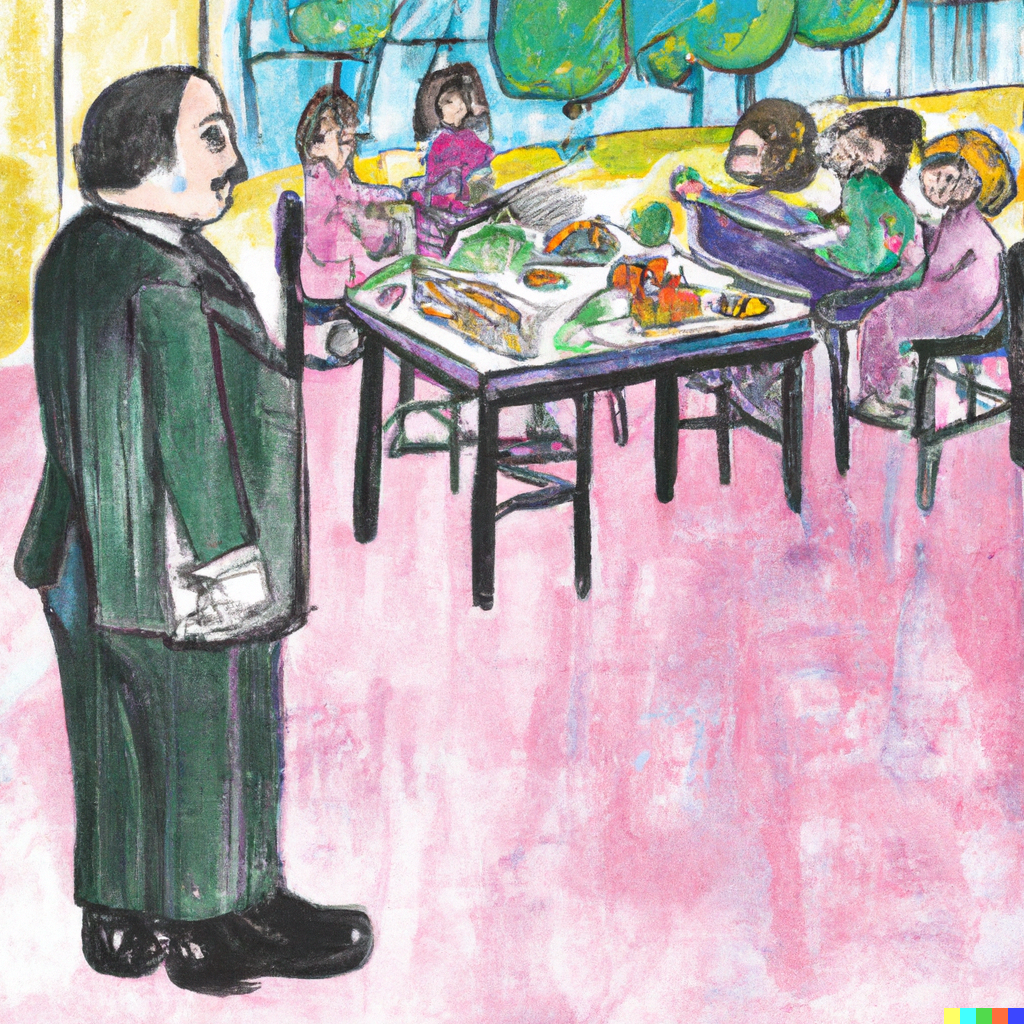
Think back to the last time you were starving.
Could you think about anything else? Perhaps you’re one of the unfortunately common people who get hangry, or short tempered after you haven’t eaten for a while?
Now, imagine that you’re a kid. This feeling of hunger is not an unfortunate result of poor planning or paralysis in picking a restaurant, but rather a perennial and gnawing fact of life. You have nowhere to turn, and none of your peers seem to have the same problem that you can tell.
Welcome to the life of one in eight American Children. Expecting someone to live life normally while facing food insecurity is unrealistic. Expecting a child to do the same is just plain sadistic. Yet, we demand as many as 9,000,000 children to get out of bed, go to school, and act like everything is fine while wondering when and what they will eat next.
In the United States, policymakers of this generation have been dealt a raw deal of problems. So many of them are systemic, so many of them are global, it often seems incredibly unrealistic to expect any resounding solutions that provide quick and provable results. Legislators architect packages with 30 year goals with 13 figure price tags, all for years of drafting and vision to be voted down due to some partisan bickering.
It’s understandable to look for a convoluted solution to everything in the current policy-making environment. There’s good news, though. There is a cost effective, and simple band aid that can be instituted right now to help address childhood hunger. It’s popular, it’s worked before, and it represents an investment that will pay incomprehensibly large dividends in decades.
Kids are hungry? Buy them lunch.
It really is that simple.
Precisely, buy school breakfast and lunch that is then distributed to any public school student who wants it, completely free. The nationwide federal free lunch program was instituted during the pandemic to take one more stressor off the shoulders of exhausted and financially strained parents.
There isn’t much explanation needed. In fiscal year 2020, the National School Lunch Program served over 2.4 billion free or reduced school lunches. In fiscal year 2021, they served 2.17 billion free or reduced school lunches.
Two polls conducted on the popularity of the program both came back with results on par with Michelle Obama’s Approval ratings: 74-76% of Americans support the program, including 67% of people without kids enrolled in school.
Colorado included a ballot measure asking whether the state should institute a moderate raise of income tax on the top 3% of earners in the state to fund the program in a ballot measure titled Proposition FF (not sure what the FF stands for, but hoping it’s free food). The proposition won, and the program launched, along with others in California, Maine, and a handful of other states.
The free lunch program is simple, fiscally realistic, and incredibly popular. Congress did not renew it.
One of the most recent adopters of a universal free lunch program is Minnesota. Governor Walz managed to garner some positive media attention after a gaggle of children smothered him with hugs right after he signed the free lunch bill into law. Sarah Huckabee Sanders signed a different law also relating to children in the same week: it relaxed labor laws for kids aged 14-16 in a myriad of ways.
I wonder why it’s so important to streamline the path to the workforce for kids in Arkansas. Perhaps because they need to work to afford lunch? Just a thought for Governor Sanders.
 please-clap.com