
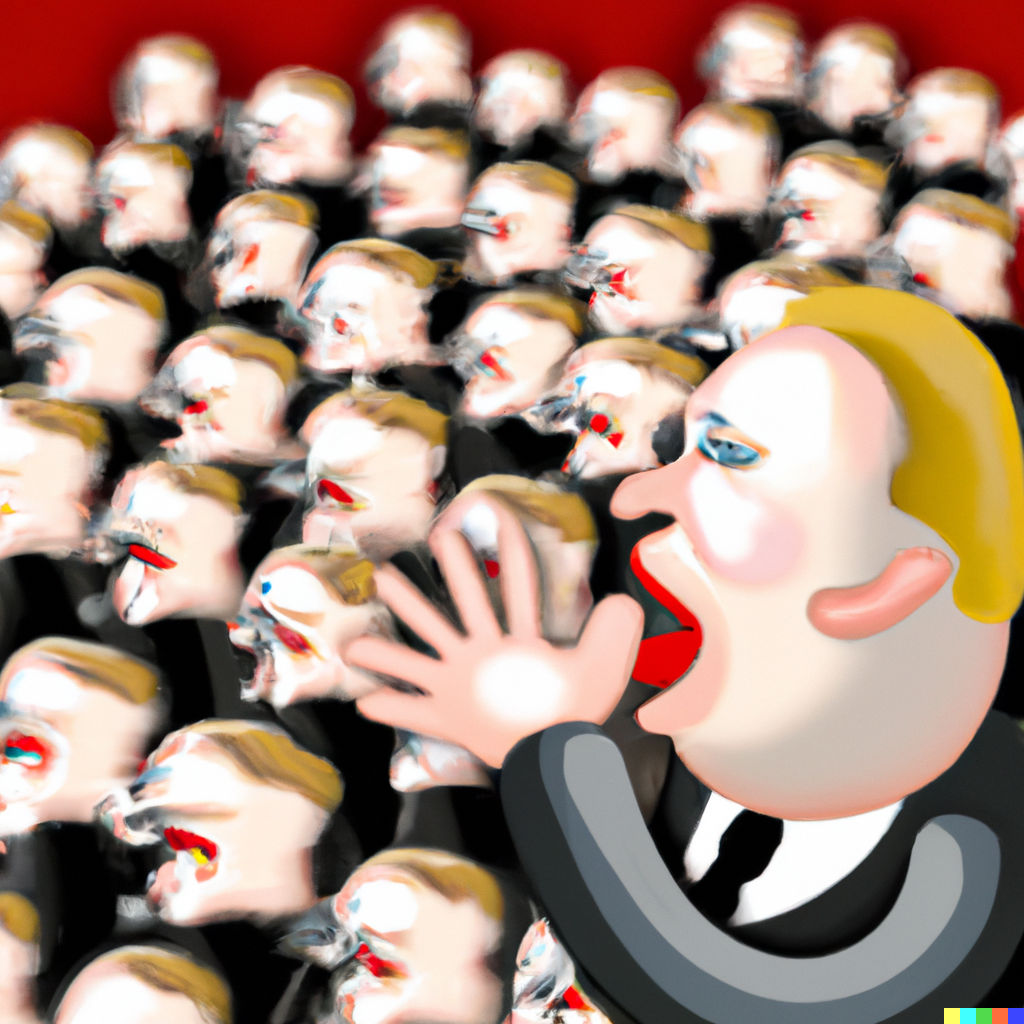
In the post – Johnson economic era, cuts remain confusingly supreme.
After wrongly attributing Vietnam inflation to Great Society spending, economists and politicians were pushed by increasingly insular suburbia to abandon Keynesian attitudes of generosity and mutual support. As memories of the great depression and universal struggle faded, safety nets languished. Through countless administrations, cuts and laisse faire policies were the end all be all – the greatest economy would eventually right itself, if we only let our successful guides lead us, newly liberated from oppressive regulation and taxes. In reality, what we have consistently received from these militantly hands-off regimes of policy is disappointment.
During Nixon’s presidency, stagflation was exacerbated by his sudden cuts. Ford’s turn from proposed spending increases towards cuts only made a budding recession worse. Carter’s 30 billion in stimulus was a respite, growing per capita GDP by 5.2% in less than 2 years, although an energy crisis overshadowed this. Reagan is perhaps the most memorable and striking manifestation of this Keynes repudiation, and also the worst offender.
Reagan finally branded this new revolution of fiscal conservatism – “Reaganomics” became the ruling policy of the day. Nothing really changed from the last 3 republican leaders, though: things just became more severe.
What Was Cut?
- In 1981, Reagan encouraged and led passage of the Economic Recovery Tax Act of 1981 (the Kemp-Roth cut). The Kemp-Roth cuts:
- Reduced personal income tax for the top bracket from 70% to 50%, and for the bottom bracket from 14% to 11%. It also cut capital gains from 28% to 20%.
- Further in 1987, he led the creation of the Tax Reform Act of 1986, which:
- Cut personal income from 50% to 38.8% (which was later cut down to 28%), and re raised capital gains back to 28%.
- Reduced the corporate tax rate from 50% to 38%
- It also simplified and eliminated loopholes in the tax code
So, final net tax changes were:
- A cut of the personal income tax rate from 70% to 28% for the richest of the rich
- A cut of the corporate tax rate from 50% to 38%
- No change in tax rates for everyone else
Does there appear to be something significant missing from these cuts? After reading into the details of both of Reagan’s trademark pieces of legislation, there is absolutely no tax cut or help for the middle class. The vast majority of Reagan’s cuts focused on the top earners. This pattern is no surprise considering the Reagan administration’s theory of economics – tax incentives and cuts for the wealthiest Americans will inevitably result in positive impacts on the economy at large, as the wealthy will let their benefits overflow into the rest of the country, hence the name “trickle down” economics.
Now that it is clear there were no direct benefits for the middle class in these cuts, it is important to evaluate whether the benefits actually did overflow and trickle down.
Result of the Cuts
While Reagan is praised by many as a champion of the economy for everyone, it seems he had a specific demographic in mind when crafting his cuts and policy. The economic results support this conclusion:
- Although the average family income rose by about 75% from 1980 – 1989, median household income only rose by 10% (adjusted for inflation) during the same time period, which was relatively average (perhaps even stagnant) for what had occurred in the preceding decades. This discrepancy indicates that the vast majority of wage increases went to the top earners, while the rest of Americans were left victims of persistent inflation that ate away at any significant wage gains.
- The average hourly wage across the country has been a good indicator of the wages of the working and middle classes of the United States since the beginning of data collection in the early 20th century. In the 1980s, there was a clear, significant, and long term decrease in the average hourly income across the United States, another indicator that the positive “headline” numbers flaunted by politicians might have been misleading – for the majority of Americans, wages were sliding or at best staying the same.
- Unemployment during the Reagan Administration remained high until his 3nd year in office, when it began decreasing from an incredibly high 10.6% in 1982. Interestingly, it seems that the original tax cut act had little or no effect on employment rates. In fact, in the years following the cut, unemployment hit all-time highs. Unemployment rates only began to drop precipitously after intervention of the Federal Government, primarily in an increase in Defense Spending and the Job Training Partnership Act
- By the end of his second term, Reagan had proposed and successfully implemented defense spending increases that summed to a whopping 43% increase from spending at the peak of the Vietnam War. This shocking increase is partially credited for the drop in unemployment, as it created significant jobs in the private sector and the armed forces themselves. Although this decrease in unemployment and stronger defense industry might be looked at as a positive, it goes against everything that Reagan believed in. These defense spending increases represent success and job creation propped up by the federal government, not achieved through an autonomous and free market. More defense spending also came with costs: Reagan nearly doubled the U.S debt during his time in office, adding 1.4 trillion dollars to it.
- Reagan also oversaw the passage of the Job Training Partnership Act of 1982, which created seven new federal government programs meant to help disadvantaged people to get jobs and job training. Although this again sounds like a positive, it directly contradicts what Reagan claimed his vision was for the American economy.
- By the end of his second term, Reagan had proposed and successfully implemented defense spending increases that summed to a whopping 43% increase from spending at the peak of the Vietnam War. This shocking increase is partially credited for the drop in unemployment, as it created significant jobs in the private sector and the armed forces themselves. Although this decrease in unemployment and stronger defense industry might be looked at as a positive, it goes against everything that Reagan believed in. These defense spending increases represent success and job creation propped up by the federal government, not achieved through an autonomous and free market. More defense spending also came with costs: Reagan nearly doubled the U.S debt during his time in office, adding 1.4 trillion dollars to it.
The creation of jobs during this time period was by no means independent and driven by the free market when one observes the implementation of new, massive government programs across the board. This inconsistency raises further questions about the success of Reagan’s cuts: they didn’t seem to drive major corporations to make new jobs, they didn’t provide any material increase for wages or income of the average household, and they provided no tax breaks for these people either.
Let’s give the Reagan administration the benefit of the doubt then. Perhaps it took a while for the benefits of the cuts to actually trickle down? Is it possible that the benefits of these tax cuts were meant to spread to the general population over a matter of multiple decades, and even generations? The proposition that President Reagan (or any president for that matter) was the intentional architect of an intergenerational change in the economic order of the United States seems a little bit ambitious, but it’s worth an examination.
Long Term Effects of the Cuts
One of the most prominent effects of Reaganomics can be observed in the messaging and policies of the Republican Party. After Reagan’s meteoric rise to stardom and maintained popularity throughout his presidency (Reagan left office with an approval rating of 68%), the party has largely stuck with his messaging and policies. Although the maintained of policies that largely help the wealthy made sense for the Republican Party in the late 20th to early 21st centuries, there is now a painfully ironic layer to their economic policy caused by the makeup of the modern GOP.
Ever since the election of Ronald Reagan, the Republican Party has made considerable inroads with white, working class voters. This pattern has been accelerated significantly by the rise of Trump and his populist appeal. It seems that this major shift is not due to any specific policy decisions, but mainly Trump’s pathos as he rails against social change and turmoil that has made many white voters uncomfortable. Regardless, the Republican Party is now presiding over a coalition of voters that it is directly cheated in its economic policy. Republicans cement their support among white working class voters by harping on social and “culture war” issues, and will turn around to craft pervasive economic policy that specifically benefits the wealthy Americans and corporations many of these voters resent.
Despite this stab-in-the-back pattern, the Republican Party relentlessly continues to espouse Reaganomics. They largely get away with it due to a mix of lackluster response from the Democratic Party, and a focus on social issues many in the Republican Party dislike or see as too progressive, preventing many from even considering the policies of the Democratic party more critically.
Economically, the results of Reaganomics have only gotten worse, as the previously examined shifts that occurred throughout the 1980s have snowballed. Right now, the top 1% in the United States owns 37% of all the wealth. The next top 9% own another 37% of the total wealth, meaning that the top 10% own 70% of the wealth in the United States. Perhaps even more strikingly, the bottom 50% of all Americans own a jaw-dropping 2% of all wealth in the country. These current numbers are also constantly getting worse – just during the pandemic, the countries 2,500 billionaires got 54% richer.
Many Americans, including a significant portion on the ideological left, argue that this wealth inequality has always been an issue and there is very little than can be done about it. When simply turning the clock back less than 100 years though, the dramatic nature of change that has occurred is apparent. From 1967 to 2012, the bottom 50%’s share in the wealth of the U.S has dropped by 72.5%. In the same period, the top 0.01%’s share has increased 261.3%. These numbers present a stark contrast between the post war economy of the 1940s-1970s, and the new conservative era of tax cuts and deregulation that still seems to dominate today.
Have the top .01% begun to work 261% harder since 1967? Have the bottom 50% become 72% more lazy? No, and no. The U.S economy has simply become beholden to a portfolio of economic policy that aggressively favors its architects: the wealthiest Americans, and no one else.
There has been no other significant change in U.S domestic economic policy since this pattern accelerated in the 1980s. Are these numbers and the patterns seen in Reagan’s tax cuts not convincing enough to reasonably conclude there is a correlation between the cuts and the newfound wealth inequality? How about these:
- From 1947 to 1949, the average income growth for the bottom fifth of Americans was 2.5%. From 1979 to 2007, the average was 0.0%
- From 1981 to 2009, the ratio of CEO to worker compensation has increased from ~25 to 231.
- New research from the Center On Budget and Policy Priorities found that we are more economically unequal today as a country than we have been any time except directly before the great depression
The Underlying Hypocrisy of Reagan and Broader Implications
Although the economic policy of the Reagan administration is frustrating on its own, the hypocrisy and ideologies that lie at the foundation of his decisions are perhaps the most confounding aspects of his politics.
Reagan’s messaging specifically accentuated a strong economy and progressive economic growth through a free market and limited government. He designed all of his policy dedicated to the concept of less – less regulation, less taxes, less debt, and less government in general. In reality, the majority of his actions were predicated on the inevitability of more. The only action he executed that led directly to a decrease in anything was his flagship tax cuts. However, in the long term, even these lead to changes he claimed he was diametrically opposed to: a higher deficit, more government, and what was essentially state sponsored industry.
 please-clap.com